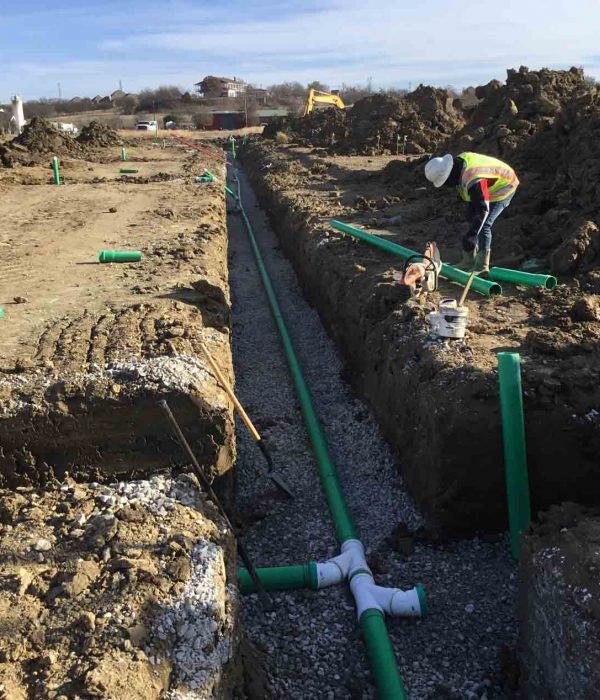
Sanitary Sewer Line Installation
Sanitary Sewer Line Installation
The sanitary sewer pipe of a residential sewer line begins at the point the main drain exits the house’s foundation. It then slopes down to connect, at the tap, with the city’s municipal branch. The sewer pipe that connects a house to the main sewer line is called the lateral. The lateral is a 4-inch pipe buried in a well-prepared, sloped trench below the frost line.
It is crucial to consider the durability of the sewer pipe first before installation, as this determines how well it will withstand natural conditions. The materials used for sanitary sewer pipes are;
It is crucial to consider the durability of the sewer pipe first before installation, as this determines how well it will withstand natural conditions. The materials used for sanitary sewer pipes are;
Steel
Steel pipes are strong, resistant, and durable but costly to make, procure and transport. They have, however, become unpopular lately because they are prone to rust which reduces their lifespan. Meaning, that steel pipes need frequent repair and replacement, which is costly.
Plastic
Plastic pipes are usually highly recommended in places prone to earthquakes. Plastic pipes are currently replacing cast-iron pipes because they are easy to handle during construction, have high strength, and are easy to maintain.
Concrete
This material is the best choice for buried infrastructure. Concrete pipes are readily available but need to be handled and installed with extra care because they break easily. They also require frequent inspections.
The Sewer Pipe
Installation Process
The installation of a new sewer line system needs to be approved by the local code authority. It also should be done by a certified professional technician because it is a challenging task. Sewer lines are installed in five steps.